
Walk into almost any home in Germany or Austria and you will find the same kind of window: one that opens like a door and tilts in at the top for fresh air. These are tilt and turn windows, and they are becoming a popular choice for homeowners in Metro Detroit who want better comfort, security and energy efficiency. Here is what they are, how they work and whether they are right for your home.
How a tilt and turn window works
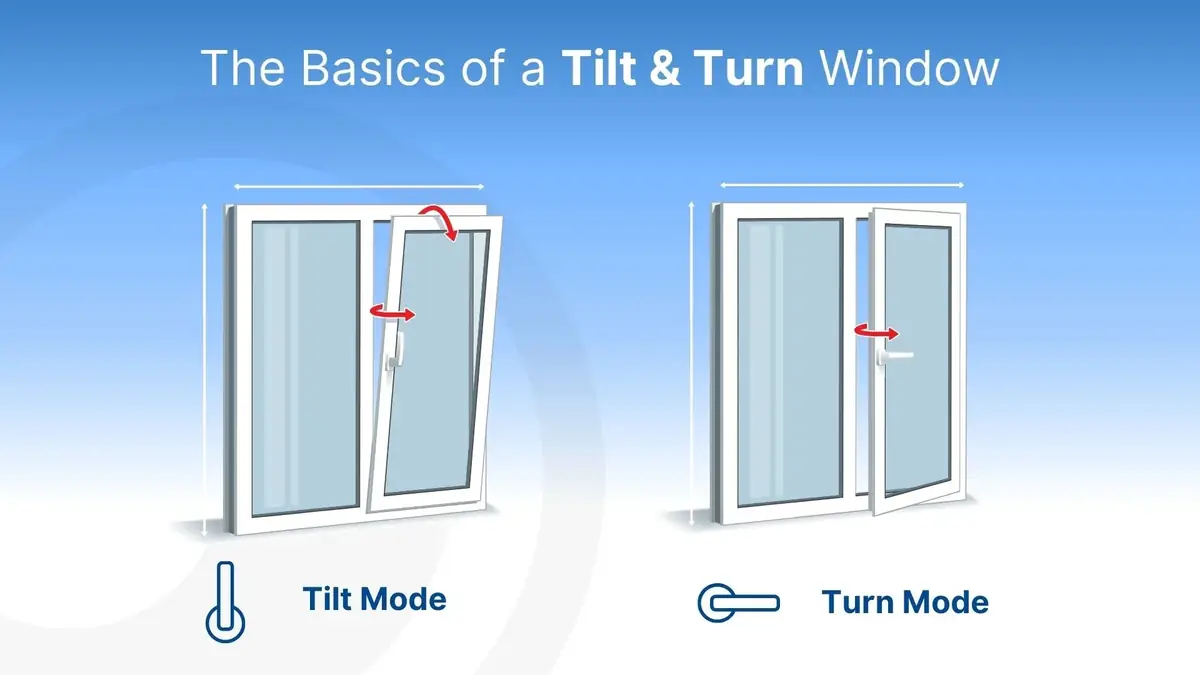
Everything is controlled by one handle. Its position decides how the window opens:
- Handle pointing down: the window is closed and locked.
- Handle turned sideways: the sash swings fully into the room like a door. Great for airing a room quickly, for cleaning, or as an emergency exit when sized for it.
- Handle pointing up: the top of the sash tilts a few inches into the room. You get steady, secure ventilation, even with light rain outside.
Why European windows are built this way
In Europe, energy codes and long, cold winters pushed window makers toward designs that seal as tightly as possible. A tilt and turn window closes inward against its frame, and a set of locking points around the sash pulls it tight onto the gaskets. That gives it several advantages over many traditional windows.
- Airtight seal: multi-point locking presses the sash onto the seals on all sides, which helps stop drafts.
- Energy efficiency: combined with insulated multi-chamber frames and double or triple glazing, they help keep heat in during winter and out in summer.
- Security: locking points around the whole sash make them much harder to force open than a window with a single latch.
- Quiet rooms: the tight seal and thick glass also cut outside noise from traffic and neighbors.
- Easy cleaning: because the sash swings in, you can clean both sides of the glass from inside your home, even on upper floors.
- Safe ventilation: in the tilt position you can leave a window open for air while the opening stays small.
Tilt and turn vs typical American windows
| Tilt and turn | Double-hung / sliding | Casement | |
|---|---|---|---|
| Opening | Swings in or tilts in | Slides up or sideways | Cranks outward |
| Seal | Excellent, compressed on all sides | Fair, seals must slide | Very good |
| Security | Multi-point locking | Usually one or two latches | Good |
| Ventilation in rain | Yes, in tilt mode | Limited | Limited |
| Cleaning outside glass | Easy from inside | Depends on model | Harder |
| Screens | Fitted on the outside | Inside or outside | Inside |
uPVC or aluminium?
Tilt and turn is a way of opening, so it is available in different frame materials:
- uPVC, such as Rehau 70, Rehau 80, Schüco 70 and Schüco 82: excellent insulation, low maintenance and great value. A strong choice for Michigan winters.
- Aluminium: slimmer frames, a very modern look and high strength for large sizes, with thermal breaks for insulation.
Things to plan for
- Inside clearance: the sash opens into the room, so think about blinds, curtains, deep sills and furniture near the window.
- Screens: since the window opens inward, insect screens are mounted on the outside of the frame.
- Children: the tilt position is a safer way to ventilate, and lockable handles are available for kids’ rooms.
- Professional installation: a European window only performs as well as it is installed. Correct sealing around the frame matters as much as the window itself.
Are tilt and turn windows right for your home?
If you want fewer drafts, lower heating bills, quieter rooms, better security and windows that are easy to clean, tilt and turn windows are hard to beat. They work beautifully in modern homes, renovations and new builds alike.
Legendary Windows supplies and installs tilt and turn windows in uPVC and aluminium for homes across Metro Detroit. Tell us about your project and we will help you choose the right system, glass and color.
Have questions about your project?
Talk to the Legendary Windows team. We serve homes across Metro Detroit and reply fast.